
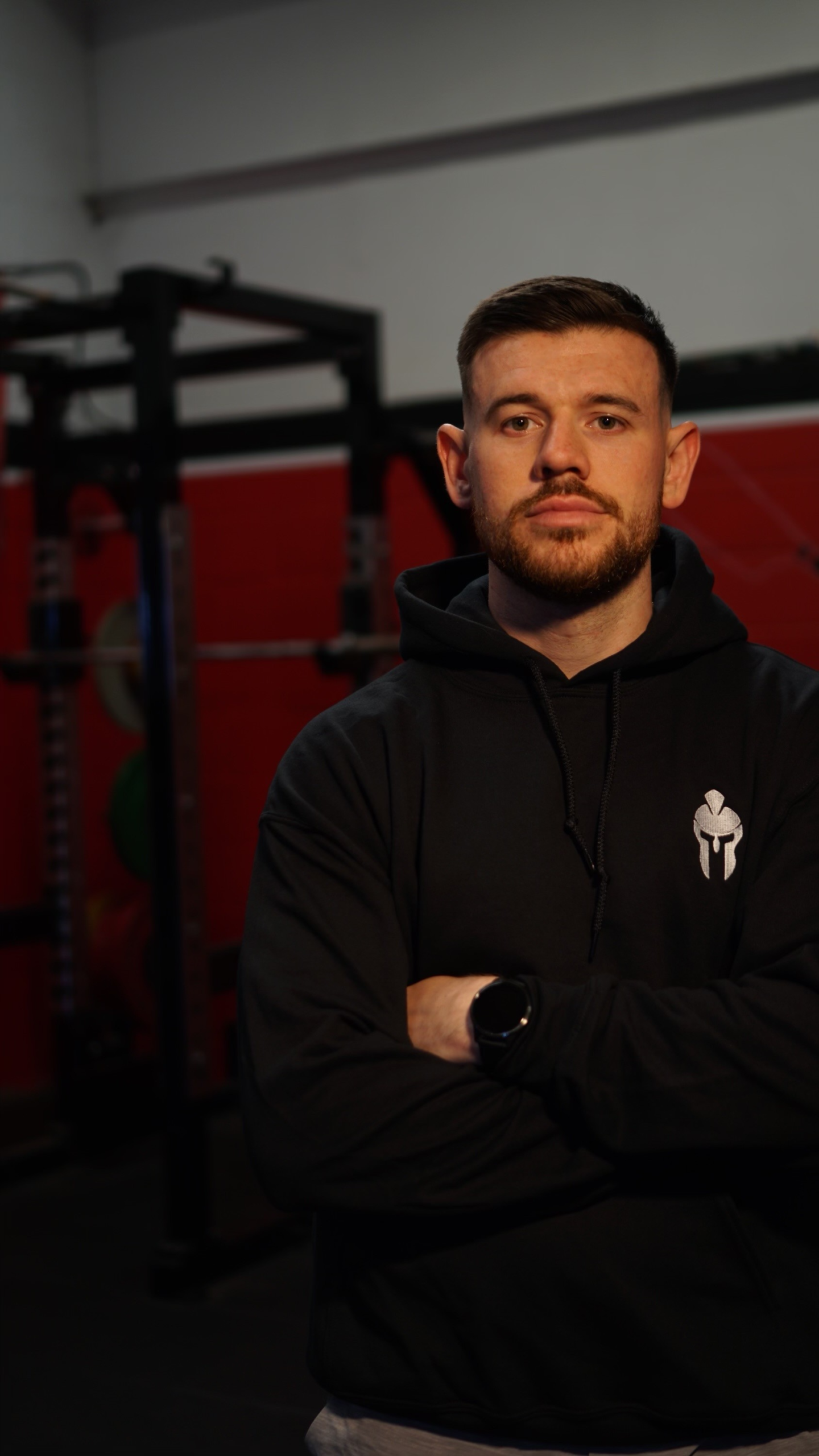

Lewis Glennan: "Train for the call you cannot predict"
Lewis Glennan, MSc in Strength & Conditioning and a former police officer, coined the term "Response Athlete" during his research — a category of professional he now trains for a living: people whose physical readiness directly determines their own safety and the safety of others.
A Response Athlete is someone whose safety — and the safety of others — depends on their physical capability on the front lines of our communities. It's a term I created during my MSc to describe police officers and emergency service professionals who must perform physically and cognitively at a high level — without the structure, recovery, or predictability afforded to traditional athletes.
What separates them is context. Traditional athletes train for competition — defined seasons, structured phases, recovery periods around a known event. Response athletes don't have that luxury. They must be ready to perform at any moment, for any call — often under fatigue, psychological stress, and sleep deprivation.
The biggest mistake is training as if their recovery is normal — when it isn't. Because of shift work, disrupted sleep, and operational stress, their nervous system is already under load. But many still try to train like professional bodybuilders — 6–7 days a week, high volume, chasing soreness as a progress indicator.
The issue isn't effort — it's misdirected effort. If you're layering high-volume work on top of sleep deprivation and high stress, you're not building resilience — you're digging a deeper recovery hole. For response athletes, training has to be strategic. It has to respect stress, not ignore it.
The priority isn't doing more — it's doing enough. This is where the concept of minimum effective dose comes in. You're not trying to maximise adaptation. You're trying to maintain strength, power, and conditioning without adding unnecessary fatigue.
I prioritise: one primary compound lift (deadlift or squat variation), two to three supporting movements, and 6–10 minutes of sharp conditioning — sprints, assault bike intervals, or loaded carries. That covers strength, structural balance, and work capacity in 40 minutes.