EUROPES FASTEST GROWING
TACTICAL FITNESS BRAND

EUROPES FASTEST GROWING
TACTICAL FITNESS BRAND
Real coaches. Real backgrounds. No theory without experience. These are the people the Tribe trains with, asks questions to, and learns from. Click an expert below to jump to their interview.


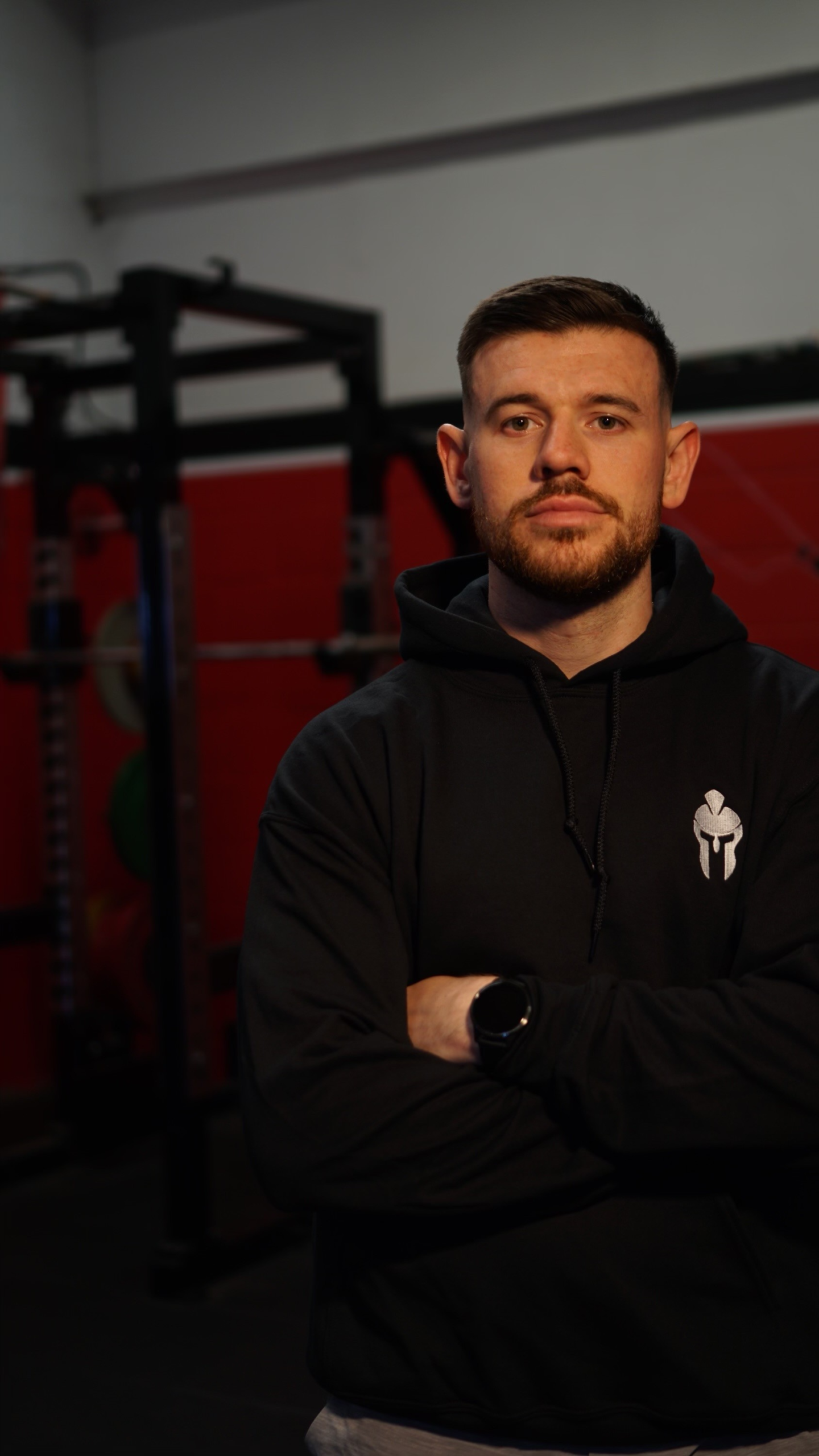


"Your real limit isn't just in your heart rate or pace. It's in the moment your mind says: 'That's enough.' And you decide: 'Not yet.'"
When my body feels empty but the challenge is far from over, I rely completely on mindset and routine. I make it small in my head. I stop thinking about the total distance or time, and focus only on the next point — the next kilometer, the next few minutes. That way I stay in control.
I also accept that it hurts. That's part of ultra. The more you fight it, the harder it becomes. So I tell myself: this is the moment you train for.
My only real rule is: keep moving. The pace can drop, it can hurt, but stopping is not an option. As long as I'm moving, I'm still in the race.
And ultimately, I draw strength from my identity. I know I'm someone who keeps going when it gets hard. In those moments, I'm no longer training my condition, but my character.
For me, it's about knowing yourself and pacing intelligently. The biggest mistake people make is starting too fast. Ego at the start line, logic switched off. But you don't win an ultra in the first hour — you can only lose it there.
I deliberately start controlled, sometimes even too slow. I want to be in a pace I can sustain for hours, where I can still eat, drink, and think clearly. Ultra endurance is not about peaks, but about managing energy.
If you truly know yourself and stay disciplined with your pace, you can stay strong much longer while others are already fighting just to survive.
You only discover your real limits when comfort, motivation, and control are gone. Long sessions reveal that. A heavy endurance workout followed by another one the next day — you're not just training your body, but your ability to keep going while fatigued.
Training when you don't feel like it is also crucial. After a long workday, early in the morning, or in bad weather. Not because it's heroic, but because you learn to perform without motivation.
Your real limit isn't just in your heart rate or pace. It's in the moment your mind says: "That's enough." And you decide: "Not yet."
In extreme endurance, mental resilience ultimately weighs more than physical capacity. Of course your body needs to be prepared. But when a race truly gets hard — when you're empty, in pain, and your brain tells you to stop — that's where mental resilience is the deciding factor.
Physical preparation gets you to the start. Mental resilience gets you to the finish.
"All-in isn't a decision. It's a standard. Anyone can blow themselves up. Not everyone can suffer in a controlled way."
The difference isn't just conditioning. It's mindset, self-awareness, and control. A good athlete can go hard. A PRO athlete knows when to push and when to hold back. He knows his weaknesses, doesn't avoid them, and actively works on them.
He's willing to go deep without becoming emotional when it hurts. Anyone can blow themselves up. Not everyone can suffer in a controlled way. At PRO level, you don't win with ego — you win with control under extreme fatigue.
They confuse training hard with full commitment. They go all out in sessions but sleep six hours. They train intensely but skip mobility. They post that they're all-in, but their nutrition is "mostly good."
HYROX is brutally honest. The fitter you are, the better you perform. There's no opinion in between. If you're truly all-in, you optimize everything — especially what no one sees. All-in isn't a decision. It's a standard.
Motivation doesn't interest me. Identity does. The standard is fixed. In weeks when it feels mentally heavier, I simplify — but I don't soften. Less noise, more focus. Shorter if necessary, but intensity and quality stay high.
No negotiation with myself. You don't lower the goal because your mood demands it. Discipline is emotionless. You do what's required. Simple as that.
An elite mindset means your life aligns with the goal. Not just during training — always. You get up when the alarm goes off. You choose food that makes you stronger. You say no to what slows you down. You train quietly. You recover like a professional. You don't need external validation because results are your validation.
It's not dramatic. It's consistent. Every day, without exception.
"Response athletes don't have the luxury of a season. They must be ready to perform at any moment — under fatigue, psychological stress, and sleep deprivation."
A Response Athlete is someone whose safety — and the safety of others — depends on their physical capability on the front lines of our communities. It's a term I created during my MSc to describe police officers and emergency service professionals who must perform physically and cognitively at a high level — without the structure, recovery, or predictability afforded to traditional athletes.
What separates them is context. Traditional athletes train for competition — defined seasons, structured phases, recovery periods around a known event. Response athletes don't have that luxury. They must be ready to perform at any moment, for any call — often under fatigue, psychological stress, and sleep deprivation.
The biggest mistake is training as if their recovery is normal — when it isn't. Because of shift work, disrupted sleep, and operational stress, their nervous system is already under load. But many still try to train like professional bodybuilders — 6–7 days a week, high volume, chasing soreness as a progress indicator.
The issue isn't effort — it's misdirected effort. If you're layering high-volume work on top of sleep deprivation and high stress, you're not building resilience — you're digging a deeper recovery hole. For response athletes, training has to be strategic. It has to respect stress, not ignore it.
The priority isn't doing more — it's doing enough. This is where the concept of minimum effective dose comes in. You're not trying to maximise adaptation. You're trying to maintain strength, power, and conditioning without adding unnecessary fatigue.
I prioritise: one primary compound lift (deadlift or squat variation), two to three supporting movements, and 6–10 minutes of sharp conditioning — sprints, assault bike intervals, or loaded carries. That covers strength, structural balance, and work capacity in 40 minutes.
For response athletes, consistency beats volume every time.
"I see selection as a test of habits under load, not potential. Stop chasing intensity, shortcuts, and last-minute solutions."
Start building structure. Train consistently, fix your basics, sleep, eat, and recover. I see selection as a test of habits under load, not potential. Stop chasing intensity, shortcuts, and last-minute solutions.
You scale the load, not the standard. Fatigue is a variable, not an excuse. Anyone who learns to train with limited energy builds readiness, not just fitness.
Fitness is performing in ideal conditions. Operational readiness is functioning repeatedly under fatigue, pressure, and uncertainty. That's why I focus on repeatability, not peak moments.
Preparation before the day starts. Sleep, planning, logistics. Anyone who controls their rhythm controls their recovery, and recovery determines whether you're ready again tomorrow.
The weight of repetition. You don't fail because of one bad day — you fail when small lapses compound. Selection doesn't break people. Inconsistency does.
"Growth happens exactly when things become difficult. Everyone goes through hard periods — the real question is: what do you want, and what are you going to do about it?"
The urge to fight is something I feel strongly when facing tough challenges. There is nothing heavier than being stuck in your own thoughts. By moving, I step out of my head and it helps me look forward. The extremes during challenges give me a real sense of being alive.
For others, I would mainly advise not just to make a plan, but to simply start and keep going when it gets hard. Growth happens exactly when things become difficult. Everyone goes through hard periods, but the real question is: what do you want, and what are you going to do about it?
I've definitely experienced that setbacks can come from small things — injuries that arise and don't go away, stress-related issues, and losing your environment or support system. What has helped me, and still does, is continuing to surround myself with the right people — people who dare to hold up a mirror to you.
Performance-focused training is often tough and requires discipline and perseverance. These are the mental elements where discomfort begins, where I often find myself again, and where there is always room for improvement. I use training for mental relaxation mainly on days when there are no expectations or pressure. You're also allowed to simply enjoy it.